
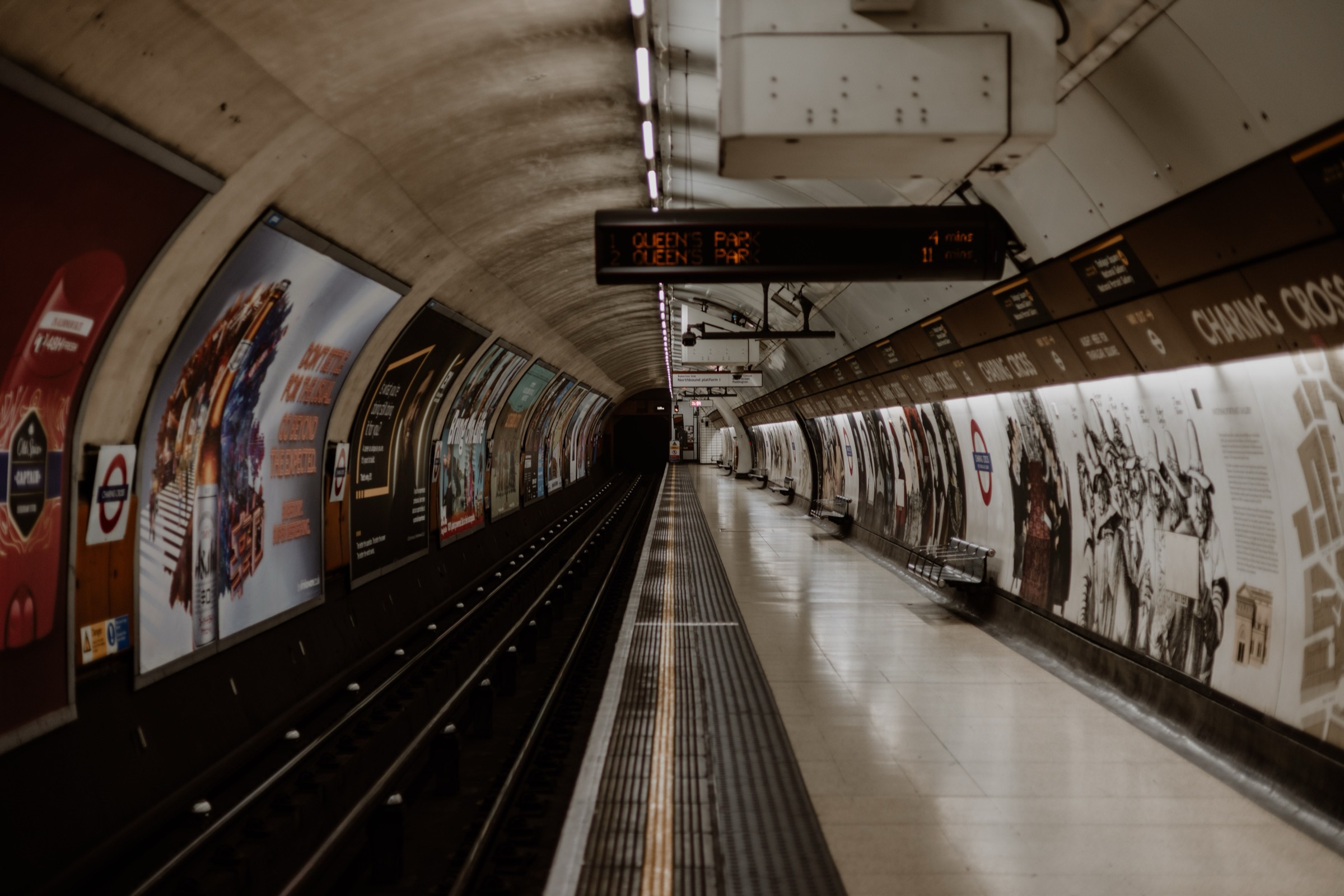
Rail networks serve as the critical backbone of modern society, moving millions of people and tons of essential goods every day. However, we have entered an era where these networks are facing a "perfect storm" of challenges, ranging from aging physical infrastructure to sophisticated digital threats. To keep trains running safely and efficiently, the industry is shifting away from simply "fixing things when they break" toward a more sophisticated philosophy known as Operational Resilience. This is not just a technical upgrade; it is a strategic necessity for the modern age. Definition: Operational Resilience is the ability of a rail network to anticipate, absorb, and recover from disruptions in real time, ensuring that critical services continue even when under extreme stress. To build this resilience, we must first understand the specific, growing threats that are making traditional methods of track and train management obsolete.
2. The Twin Threats: Climate and Cyber
The modern rail environment is no longer just about steel and steam; it is a complex web of interconnected physical assets and digital controllers. This evolution has introduced two primary categories of risk that traditional maintenance cannot handle alone. Research shows that the scale of these issues is immense. For instance, 70% of EU infrastructure managers now report that climate-related events are causing increasing disruptions to their networks. These aren't just minor delays; they represent a fundamental shift in how we must protect our assets to avoid massive economic loss.
| Threat Type | Real-World Impact |
|---|---|
| Climate Events | Since 2021, major floods and storms across Europe have caused over €2.3B in infrastructure damage. |
| Cyber-Physical Risks | The convergence of IT and OT (Operational Technology) means digital vulnerabilities can now lead to physical failures, potentially compromising safety-critical signaling systems. |
While these threats are growing, the way we maintain our trains hasn't always kept pace, leading to a "hidden danger" in our operations.
3. Unmasking the "Efficiency Trap"
For decades, rail maintenance relied on fixed schedules, for example, replacing a part every six months regardless of its actual condition. This is known as the "Efficiency Trap." In this model, operators often replace perfectly healthy parts prematurely (wasting money) or, conversely, miss early signs of failure that occur between inspections (causing unexpected breakdowns). This creates a "Reactive Gap" where the system is always playing catch-up. A resilient approach, like the one developed by NuvantiQ, seeks to close this gap by moving from manual, time-based guesses to data-driven certainty.
Comparison: Traditional vs. Resilient Maintenance
Dimension,Traditional (Reactive),Resilient (NuvantiQ)
Maintenance Type,Run-to-Failure or Time-based,Predictive & Condition-based
Inspection Method,"Manual, physical inspections",Real-time IoT & Bidirectional data*
Ultimate Goal,"Restore the system to ""Normal""",Ensure Sustained Critical Service
*Note: "Bidirectional" data means the system doesn't just receive health signals; it can send commands back to assets to mitigate risks in real time. Breaking out of this trap requires a new language of technology and data to create a "digital shield" around the railway.
4. The Language of the Digital Shield: Key Concepts
To understand how modern rail stays resilient, students must be familiar with three core technical pillars:
OT Telemetry: Think of this as the live "heartbeat" of rail assets. It involves the constant stream of data from Operational Technology (OT) sensors, including live sensor readings, backup system status, and vendor access monitoring .
Condition-Based Monitoring: Unlike "Run-to-Failure" models, this approach uses data to monitor the actual wear and tear of a part. By acting only when the data shows a need, operators can see a 20 to 40% reduction in unplanned failures .
AI-Driven Intelligence: This technology provides the "brain" for the operation. It offers real-time visibility and predictive insights, allowing operators to see a problem forming long before a human inspector could. Student Tip: The most important takeaway here is the shift in timing. In the old world, we reacted to disruption. In the resilient world, the goal is to act before the disruption even occurs. This shift is what separates a technician from a strategist.
5. The 4-Stage Resilience Lifecycle
Operational resilience is not a one-time fix; it is a continuous loop. This lifecycle ensures that the rail network is constantly evolving to meet new threats.
1. Anticipate
Before a failure happens, operators use threat modeling and cyber-physical risk assessments. IoT sensors are used to identify "early signatures" of failure, tiny data anomalies that suggest a part is starting to wear out before it actually breaks.
2. Absorb & Adapt
If a problem does occur, the system is designed to "absorb" the impact. This involves using safety-critical signaling segmentation to isolate issues, ensuring that a breach or failure in one area doesn't lead to a network-wide collapse. Predefined playbooks allow operations to adjust in real time without stopping production entirely.
3. Recover
When a disruption happens, speed is vital. Automated response protocols and AI-driven sequences are used to restore functions rapidly. Crucially, every incident is treated as a lesson, feeding data back into the system to improve future responses.
4. Assure
Resilience must be proven, not assumed. This stage involves continuous monitoring to ensure compliance with the new global standards for industrial safety and security, including NIS2, DORA, and CSM RA . Here, we validate two critical targets:
RTO (Recovery Time Objective): How long it takes to get the system back up. (A strategist knows this is the difference between a 10-minute delay and a city-wide standstill).
RPO (Recovery Point Objective): How much data or "progress" the system can afford to lose during the incident.
6. The "So What?": Measurable Outcomes for Future Rail
Transitioning to a resilient, predictive model isn't just about high-tech gadgets; it produces massive, measurable improvements in how a railway functions. By adopting these strategies, rail operators achieve:
Failure Reduction (20 to 40%): Condition-based monitoring eliminates unexpected breakdowns, ensuring reliable passenger travel.
Hauling Capacity Gain (60%): AI-driven adaptive rescheduling allows more trains to run on the same tracks safely, maximizing the utility of the infrastructure.
Total Cost of Ownership (TCO) Reduction (10 to 25%): Proactive maintenance is significantly more cost-effective than emergency reactive repairs.
Asset Service Life Extension (20%): Maintaining machines precisely according to their data-driven needs allows infrastructure to last years longer. As you look toward the future of transportation, remember that the most successful systems won't just be the fastest, they will be the most resilient. By mastering these "digital shields" and the global regulatory frameworks like NIS2 and CSM RA, you are positioning yourself as a vital architect of the world's most critical infrastructure. The future of rail stays moving because of the resilience you build today.
Find out if your operations could survive disruption.
We pressure-test resilience the way an incident would, then give you the evidence to act on. Engineers who have stood in the control room, not a sales queue.